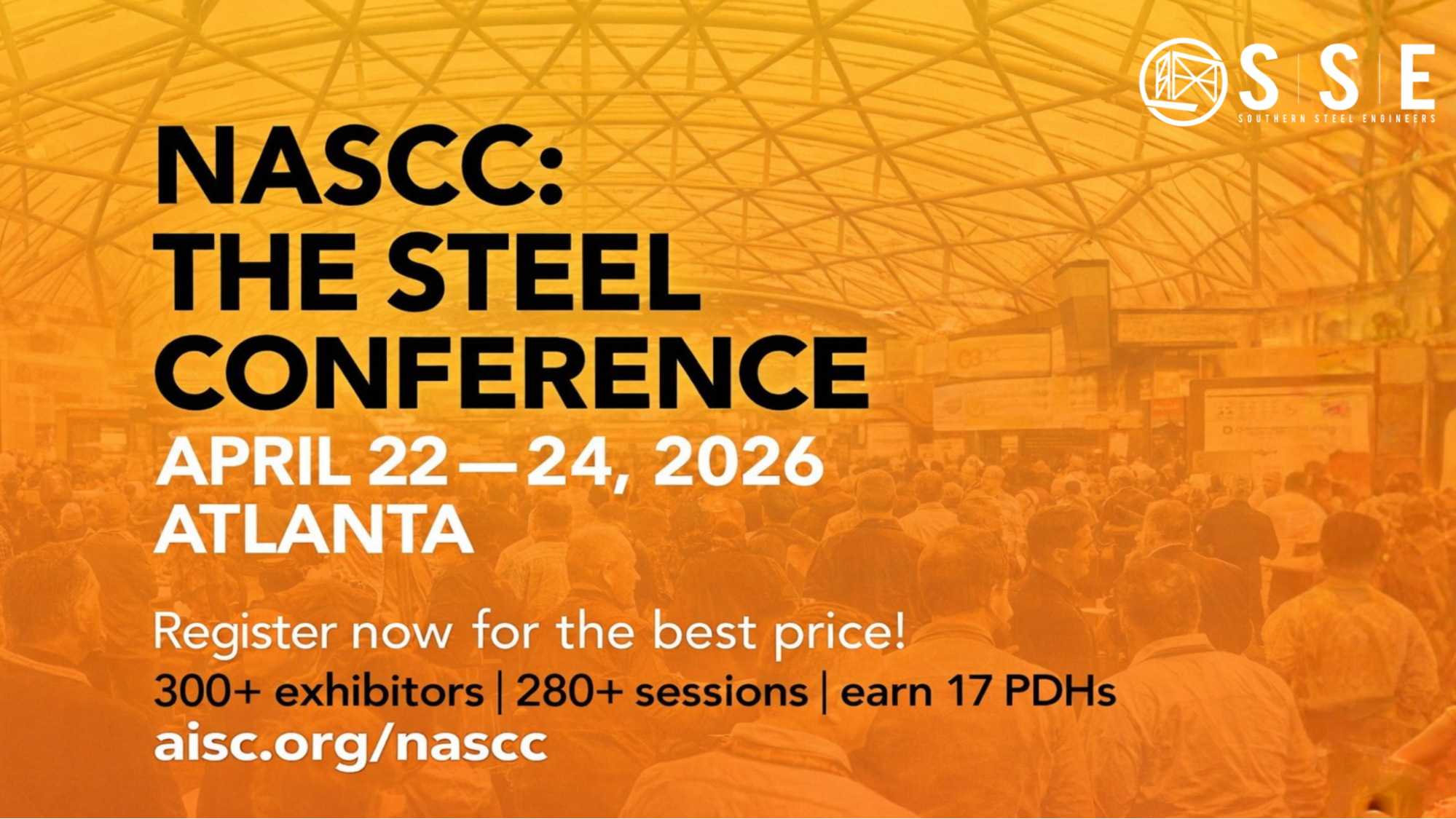
NASCC: The Steel Conference brings together fabricators, detailers, erectors, and engineers for hundreds of technical sessions, exhibit hall demonstrations, and networking opportunities each year. Getting the most out of it requires a plan. This article shares how Southern Steel Engineers approaches session planning, the exhibit hall, networking, and team development at the conference.
At Southern Steel Engineers, we have attended The Steel Conference every year since the company’s founding. We bring our entire engineering team because we believe there is no better opportunity to stay sharp on code updates, connect with people across the industry, and see where things are headed. This year, NASCC takes place in Atlanta, Georgia, from April 22 through April 24, and members of our team will be presenting at the conference as well.
Over the years, we have learned that what you get out of the conference depends almost entirely on how intentionally you approach it. It is easy to stay busy for three days and still leave without clear takeaways. The ideas in this article come directly from what has worked for us.
Before you look at the session schedule, take a step back and think about what you want to accomplish. Are you trying to work through a specific technical challenge? Staying current on code changes or new design approaches? Looking to build relationships with fabricators, vendors, or potential clients? Bringing a younger engineer who needs exposure to the broader industry?
There is no wrong answer, but it matters because it changes how you spend your time. If you are going for technical depth, your schedule will lean toward sessions. If relationship building is the priority, the exhibit hall and social events become more important. When our team knows what they are trying to accomplish before they arrive, they consistently come back with more actionable takeaways.
Once AISC releases the full session schedule, go through it before you get on site. The Steel Conference runs multiple tracks at the same time, and it is not possible to attend everything. Identify the sessions that align with your role, your current projects, or areas where you want to grow. From an engineering standpoint, the most valuable sessions tend to be the ones that address something you are actively working through, not just topics that sound interesting in the abstract. That said, leave room for sessions outside your normal scope. Some of the best learning moments come from topics you did not plan on attending, and most sessions offer PDH credits.
If you are bringing multiple people, coordinate so your team covers different sessions and compares notes at the end of the day. And do not overbook yourself. Back-to-back sessions all day will burn you out and leave no time for the conversations that happen in between.
The Steel Conference mobile app makes it easy to save sessions, build a personalized schedule, and adjust on the fly as your plans evolve.
It is natural to gravitate toward sessions that mirror your day-to-day work, but some of the biggest gains come from stepping just outside your usual scope. Engineers benefit from hearing about fabrication and erection challenges. Fabricators who attend engineering-focused sessions gain insight into design intent and load paths. Detailers pick up important context from sessions on connections, miscellaneous steel, or constructability.
The conference also offers discipline-specific tracks and events. Detailers may want to attend NISD programming, and fabricators may want to dedicate more time to the exhibit hall floor exploring equipment and processes. The point is to be deliberate about how you balance depth in your own area with exposure to what is happening around you.
The exhibit hall is a snapshot of where the steel industry is headed. Software tools, connection products, fabrication equipment, coatings, and everything in between. It is a lot to take in.
Before you go, think about what you actually need. Are there tools you have been evaluating? Products or services you are curious about? Make a short list and prioritize those booths first. When you get there, have real conversations. Ask how a product works in the field, what kind of support comes with it, and how it fits with what you are already doing.
The exhibit hall is also a great place to reconnect with people you have worked with or meet new contacts in a lower-pressure setting. If you are not sure where to start, just walk the floor. You will run into people you know, see things you did not know existed, and get a feel for where the industry is moving.
The networking opportunities at NASCC are just as valuable as the technical sessions, but they are easy to skip if you are not intentional about them.
A lot of the best conversations do not happen in a breakout room. They happen over lunch, at a reception, or in the hallway between sessions. Those informal moments are where you get to talk through real problems, share experiences, and build relationships that carry forward long after the conference ends.
If AISC or a sponsor is hosting a reception or social event, go. Even if you are not the type to work a room, just being present puts you in a position to meet people. And do not underestimate the person sitting next to you in a session. Ask what brought them to that topic, what they are working on, what challenges they are seeing. Those casual conversations turn into long-term professional relationships more often than you might expect.
If you have the budget and the flexibility, bring people from your team, especially younger engineers or newer hires. NASCC gives them exposure to the broader steel industry that they cannot get sitting at a desk. They see how other firms and fabricators approach problems, hear from industry leaders, and start building their own professional network.
At SSE, we have seen firsthand that when we invest in getting our team to the conference, they come back energized and with a better understanding of how their work fits into the bigger picture. Make sure you are checking in with them throughout the event. Talk through what they are learning, what surprised them, and what they want to apply when they get back.
We see The Steel Conference as an investment in our people, in our perspective, and in the relationships that make this industry work. Staying current on where the industry is headed, engaging with the people we work alongside, and giving our team opportunities to grow are not things we treat as optional. They are part of how we operate. Whether this is your first conference or your tenth, the goal is the same: sharpen your technical expertise, gain practical industry knowledge, stay ahead of where the steel industry is going, and build relationships and lessons you can carry back into your role.