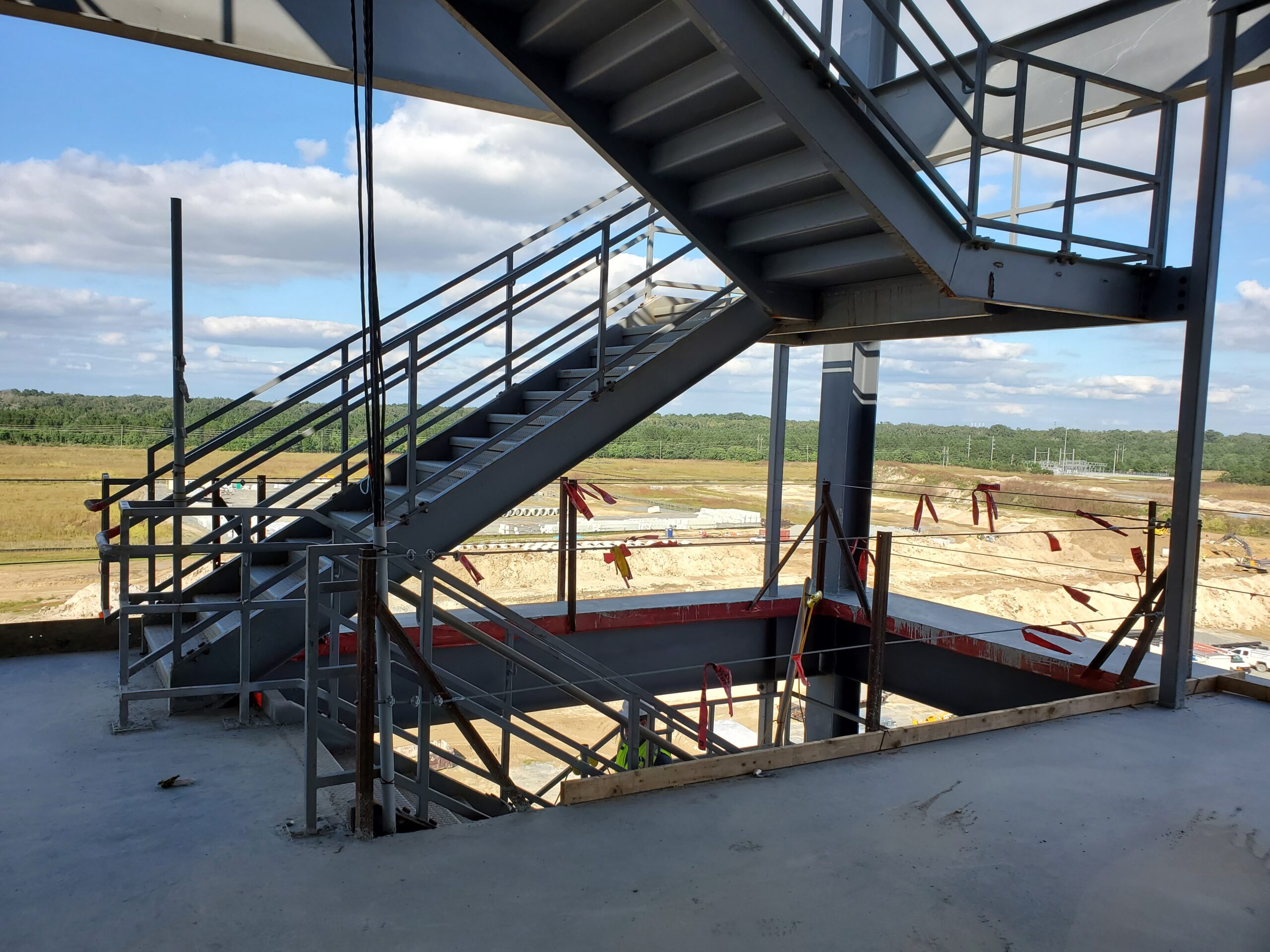
When it comes to delegated design, miscellaneous steel items like stairs, ladders, railings, and platforms are often overlooked, but they’re some of the trickiest components on the job. They touch architecture, structure, and fabrication in unique ways. That’s why it’s important to approach them with coordination in mind from the beginning.
At Southern Steel Engineers, we support fabricators and erectors on projects where stair and rail design isn’t just an afterthought. Here are three ways to make your next miscellaneous steel scope go more smoothly.
The engineer or architect of record should provide as much design intent as possible on the contract drawings.
This includes basic geometry, intended function and use (such as public access stairs or roof ladders), and any design constraints. For example:
Getting this information early sets the stage for aligned design and fewer RFIs later.
There’s more than one way to build a stair, and fabricators often have preferences or practical constraints that may not be captured on the architectural drawings.
Open communication between the design team and the steel subcontractor is key. What the architect envisions may not always match what is most buildable. Good coordination can help align intent with shop-friendly solutions that still meet performance and aesthetic goals.
Stairs and rails do not exist in a vacuum. They interact directly with the structural frame, and that interaction needs to be accounted for in both design and detailing.
Here are a few common coordination gaps to watch for:
The structural team should provide this information early so the stair or ladder design can reflect those realities. Missteps here often lead to field issues or costly revisions during detailing.
Miscellaneous steel elements need to function with the building, not against it. With the right intent, coordination, and structural clarity, stair and railing design can be both efficient and constructible.